


Introduction
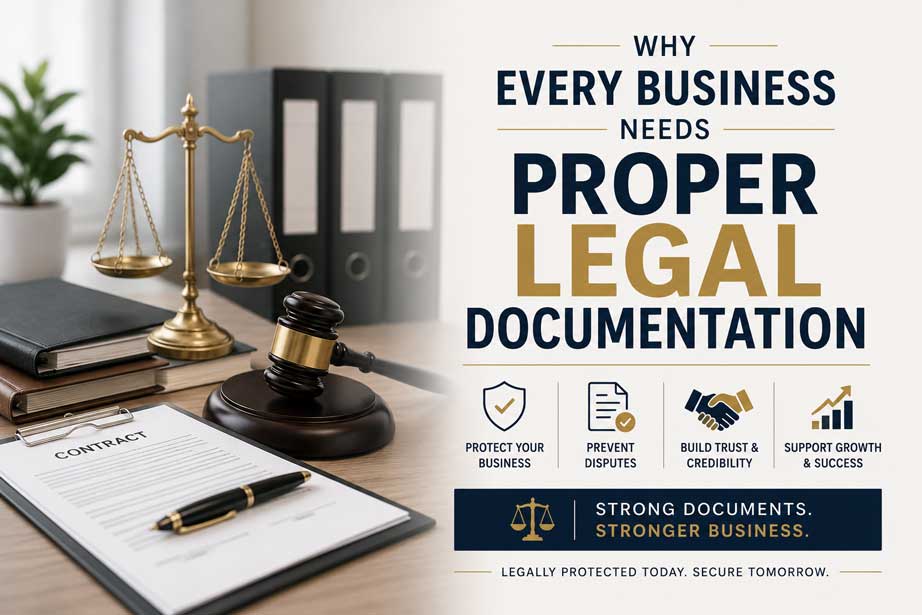
Every successful business is built on trust, innovation, and strong relationships. However, no matter how promising a business idea may be, it is equally important to establish a solid legal foundation. One of the most effective ways to safeguard a business is through proper legal documentation.
Many entrepreneurs focus heavily on product development, marketing, sales, and expansion while overlooking legal documentation until a dispute arises. Unfortunately, by the time disagreements occur, the absence of properly drafted agreements can result in lengthy litigation, financial losses, damaged business relationships, and reputational harm.
Whether you operate a startup, partnership firm, private limited company, LLP, proprietorship, or large enterprise, professionally drafted legal documents play a vital role in protecting your rights, defining responsibilities, and ensuring smooth business operations. This article explains why legal documentation is indispensable for every business and how it contributes to long-term growth and stability.
What Is Business Legal Documentation?
Business legal documentation refers to legally enforceable agreements, policies, contracts, and records that govern relationships between a business and its stakeholders.
These documents establish:
- Rights and obligations.
- Commercial terms.
- Payment conditions.
- Confidentiality requirements.
- Ownership of intellectual property.
- Dispute resolution mechanisms.
- Regulatory compliance.
Well-drafted documentation minimizes uncertainty and provides clarity whenever disagreements arise.
Why Legal Documentation Is Important
1. Prevents Future Disputes
Most commercial disputes arise not because parties intend to act dishonestly, but because expectations were never clearly documented.
Proper agreements define:
- Scope of work.
- Deliverables.
- Timelines.
- Payment obligations.
- Responsibilities.
- Termination rights.
This reduces misunderstandings and strengthens business relationships.
2. Protects Business Interests
Legal documentation serves as a protective shield for your business.
It safeguards:
- Business assets.
- Trade secrets.
- Client information.
- Intellectual property.
- Brand identity.
- Financial interests.
Without proper documentation, enforcing these rights becomes considerably more difficult.
3. Strengthens Business Credibility
Clients, investors, financial institutions, and business partners often evaluate a company’s professionalism by examining its legal documentation.
Properly drafted agreements inspire confidence and demonstrate responsible business management.
Professional documentation also reflects organizational maturity and commitment to compliance.
Essential Legal Documents Every Business Should Have
Business Formation Documents
Every business should maintain documents relating to its legal constitution, including:
- Partnership Deed.
- LLP Agreement.
- Memorandum of Association (MOA).
- Articles of Association (AOA).
- Shareholders’ Agreement.
- Founders’ Agreement.
These documents clearly define ownership, governance, and management responsibilities.
Employment Agreements
Employees are among a company’s most valuable assets.
Employment contracts should clearly specify:
- Job responsibilities.
- Salary and benefits.
- Confidentiality obligations.
- Non-compete clauses (where legally enforceable).
- Notice period.
- Termination conditions.
Clear employment documentation helps avoid workplace disputes.
Vendor and Service Agreements
Businesses regularly engage suppliers, consultants, contractors, and service providers.
Written agreements should include:
- Scope of services.
- Payment terms.
- Delivery schedules.
- Quality standards.
- Liability clauses.
- Dispute resolution provisions.
These agreements provide certainty and accountability for both parties.
Non-Disclosure Agreements (NDAs)
Businesses frequently share confidential information with employees, consultants, vendors, investors, or prospective partners.
A properly drafted NDA protects:
- Trade secrets.
- Customer databases.
- Business strategies.
- Product designs.
- Financial information.
- Proprietary technology.
Protecting confidential information is particularly important in today’s digital economy.
Website Legal Policies
Businesses operating online should maintain legally compliant website documentation such as:
- Privacy Policy.
- Terms and Conditions.
- Cookie Policy.
- Disclaimer.
- Refund and Cancellation Policy (where applicable).
- Shipping Policy (for e-commerce businesses).
These policies promote transparency while reducing legal risks.
Importance of Well-Drafted Contracts
A contract is much more than a legal formality.
A professionally drafted agreement defines:
- Rights of each party.
- Obligations.
- Deadlines.
- Payment schedules.
- Liability.
- Force majeure events.
- Confidentiality.
- Governing law.
- Jurisdiction.
- Arbitration or dispute resolution clauses.
Generic online templates often fail to address the specific needs of a business and may create significant legal exposure.
Common Mistakes Businesses Make
Many businesses unknowingly expose themselves to legal risks by making avoidable mistakes.
These include:
- Relying on verbal agreements.
- Copying templates from the internet.
- Using outdated contracts.
- Failing to review agreements periodically.
- Ignoring compliance requirements.
- Signing documents without legal review.
- Not preserving executed agreements.
Such mistakes often become expensive when disputes arise.
Legal Documentation Helps During Disputes
When litigation becomes unavoidable, documentation serves as the primary evidence before courts, tribunals, or arbitral authorities.
Proper agreements assist in establishing:
- Contractual obligations.
- Payment liabilities.
- Ownership rights.
- Breach of contract.
- Commercial understanding between parties.
Strong documentation frequently determines the outcome of commercial disputes.
Compliance with Indian Laws
Businesses in India must comply with numerous legal and regulatory requirements depending on their nature and industry.
Proper documentation facilitates compliance with laws relating to:
- Companies.
- Taxation.
- Labour.
- Intellectual Property.
- Data Protection.
- Consumer Protection.
- Commercial Transactions.
- Information Technology.
Maintaining legally compliant records reduces regulatory risk and improves corporate governance.
The Role of Preventive Legal Advice
Many entrepreneurs consult advocates only after disputes arise.
However, preventive legal advice offers significant long-term benefits by:
- Identifying potential legal risks.
- Reviewing contracts before execution.
- Structuring transactions appropriately.
- Ensuring regulatory compliance.
- Protecting intellectual property.
- Avoiding unnecessary litigation.
Investing in preventive legal services is often far less expensive than defending a lawsuit.
Practical Tips for Business Owners
Every business should adopt the following practices:
- Use written agreements for every important transaction.
- Review contracts periodically.
- Preserve signed copies of all legal documents.
- Seek legal review before signing major agreements.
- Maintain compliance records.
- Protect confidential business information.
- Update legal policies whenever laws change.
- Consult a legal professional before entering significant commercial arrangements.
A proactive legal approach helps businesses grow with confidence.
Conclusion
Legal documentation is not merely an administrative requirement—it is an essential component of responsible business management. Properly drafted agreements and policies establish clarity, reduce disputes, protect valuable assets, and create a strong legal framework that supports sustainable growth.
Whether you are launching a startup, expanding an existing business, or entering into commercial partnerships, investing in professional legal documentation is an investment in the future of your enterprise. By addressing legal issues proactively rather than reactively, businesses can focus on innovation, growth, and long-term success with greater confidence and security.
Frequently Asked Questions (FAQs)
1. Why are written contracts better than verbal agreements?
Written contracts clearly record the rights and obligations of the parties, making them easier to interpret and enforce if disputes arise.
2. Can I use free contract templates available online?
Generic templates may not address your specific business requirements or comply with current legal standards. Professional drafting is always advisable for important commercial agreements.
3. What documents should every startup maintain?
Common documents include founders’ agreements, shareholder agreements, employment contracts, NDAs, vendor agreements, website policies, and intellectual property assignments.
4. How often should business agreements be reviewed?
Businesses should review their legal documents periodically and whenever there are significant changes in law, business operations, or commercial relationships.
5. Does legal documentation help in court?
Yes. Properly drafted and executed agreements often serve as crucial evidence in commercial disputes and significantly strengthen a party’s legal position.
Disclaimer
This article is intended solely for informational and educational purposes and should not be construed as legal advice. Every business has unique legal requirements depending on its structure, industry, and commercial operations. Businesses should consult a qualified legal professional before drafting, reviewing, or executing any legal documentation.